AI Receptionist vs Human Receptionist for Tradespeople: 2026
Choosing between an AI receptionist and a human receptionist is a crucial decision for UK tradespeople in 2026. As technology advances, AI receptionists are becoming increasingly sophisticated, offering a potential alternative to traditional human receptionists. This comprehensive guide explores the pros and cons of each option, helping you determine the best fit for your business needs and budget.
What is an AI Receptionist? Understanding the Technology
An AI receptionist, also known as a virtual receptionist or AI phone answering service, uses artificial intelligence to handle incoming calls, schedule appointments, answer frequently asked questions, and manage messages. They operate 24/7, 365 days a year, without the need for breaks, holidays, or sick leave. Sophisticated AI receptionists can even learn your business inside and out, directing calls to the right team member, providing estimates, and even processing payments.
Tip:
Look for an AI receptionist that integrates with your existing job management software. This will ensure seamless data flow and avoid manual data entry, saving you valuable time.
Benefits of an AI Receptionist for Tradespeople
* Cost Savings: AI receptionists typically have a lower upfront and ongoing cost compared to hiring a full-time human receptionist. You avoid expenses like salary, benefits, training, and office space.
* 24/7 Availability: AI receptionists provide round-the-clock coverage, ensuring that you never miss a call or an opportunity, even outside of regular business hours. This is especially important for emergency call-outs.
* Efficiency and Automation: AI can automate many routine tasks, such as answering common questions, scheduling appointments, and taking messages, freeing up your time to focus on more important aspects of your business.
* Scalability: AI receptionists can easily handle fluctuations in call volume, scaling up or down as needed without requiring additional staff.
* Data Collection and Analysis: AI systems can collect data on call patterns, customer inquiries, and other valuable information, providing insights that can help you improve your business processes.
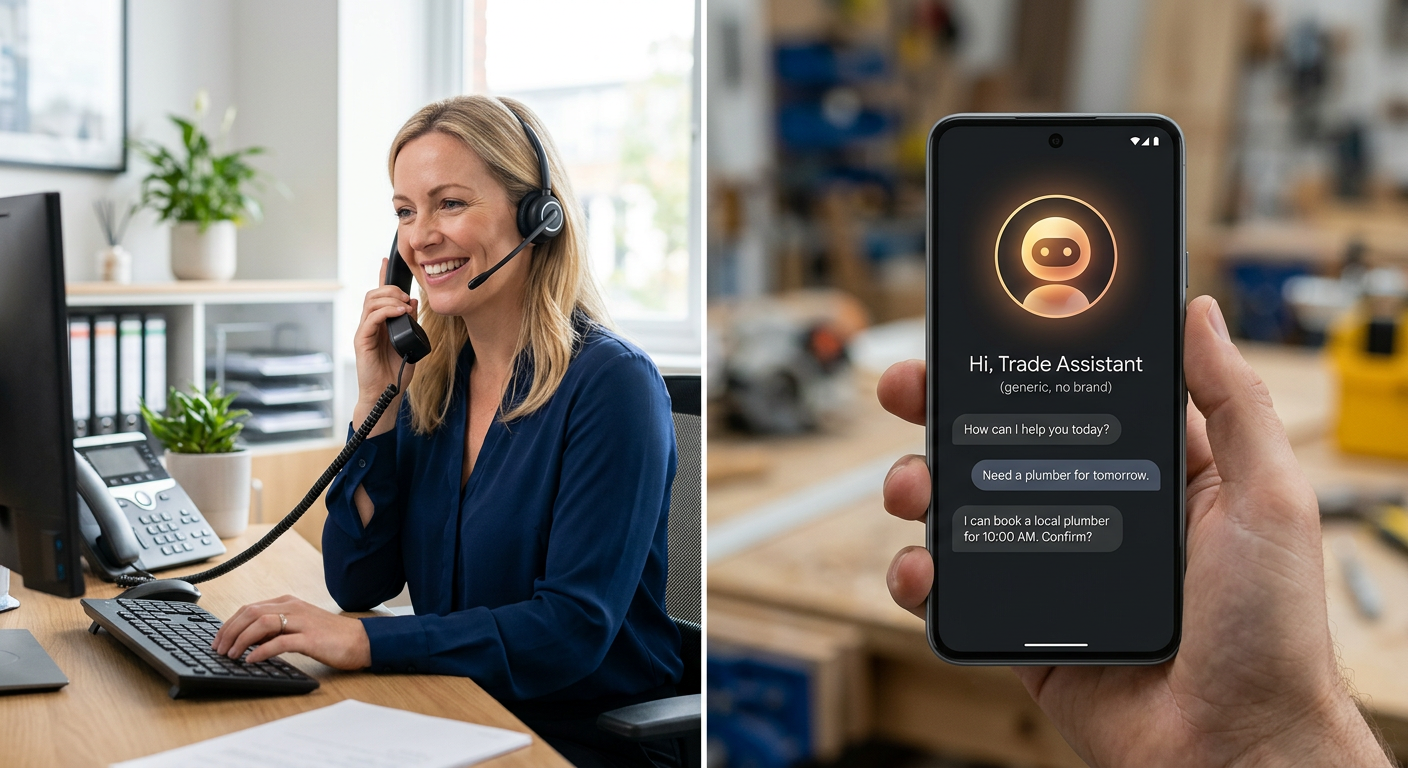
Drawbacks of an AI Receptionist
* Lack of Personal Touch: While AI is becoming more advanced, it may still lack the personal touch and empathy that a human receptionist can provide. Some customers may prefer interacting with a real person.
* Limited Problem-Solving Capabilities: AI may struggle with complex or unusual inquiries that require creative problem-solving skills.
* Setup and Training: While generally easy to set up, you'll still need to invest time in training the AI receptionist and ensuring it understands your business processes and terminology.
* Potential for Errors: AI systems are not perfect and can sometimes make mistakes, such as misinterpreting customer requests or providing inaccurate information.
* Technical Issues: Like any technology, AI receptionists are susceptible to technical glitches or downtime, which can disrupt your customer service.
Benefits of a Human Receptionist for Tradespeople
* Personal Connection: Human receptionists can build rapport with customers, providing a more personal and empathetic experience. This can be especially important for building trust and loyalty.
* Complex Problem-Solving: Human receptionists are better equipped to handle complex or unusual inquiries that require critical thinking and problem-solving skills.
* Adaptability: Human receptionists can adapt to changing situations and customer needs more easily than AI systems.
* Local Knowledge: Human receptionists are likely to have local knowledge and connections that can be valuable for your business.
* Building Relationships: A familiar voice answering the phone can lead to stronger customer relationships, which is particularly important for local trades businesses.
Drawbacks of a Human Receptionist
* Higher Costs: Hiring a full-time human receptionist is significantly more expensive than using an AI receptionist. You need to factor in salary, benefits, training, and other expenses.
* Limited Availability: Human receptionists are not available 24/7 and require breaks, holidays, and sick leave. This can lead to missed calls and lost opportunities.
* Inconsistency: The quality of customer service provided by a human receptionist can vary depending on their mood, experience, and training.
* Potential for Errors: Human receptionists are prone to making errors, such as misinterpreting customer requests or providing inaccurate information.
* Management Overhead: Managing a human receptionist requires time and effort, including training, supervision, and performance reviews.
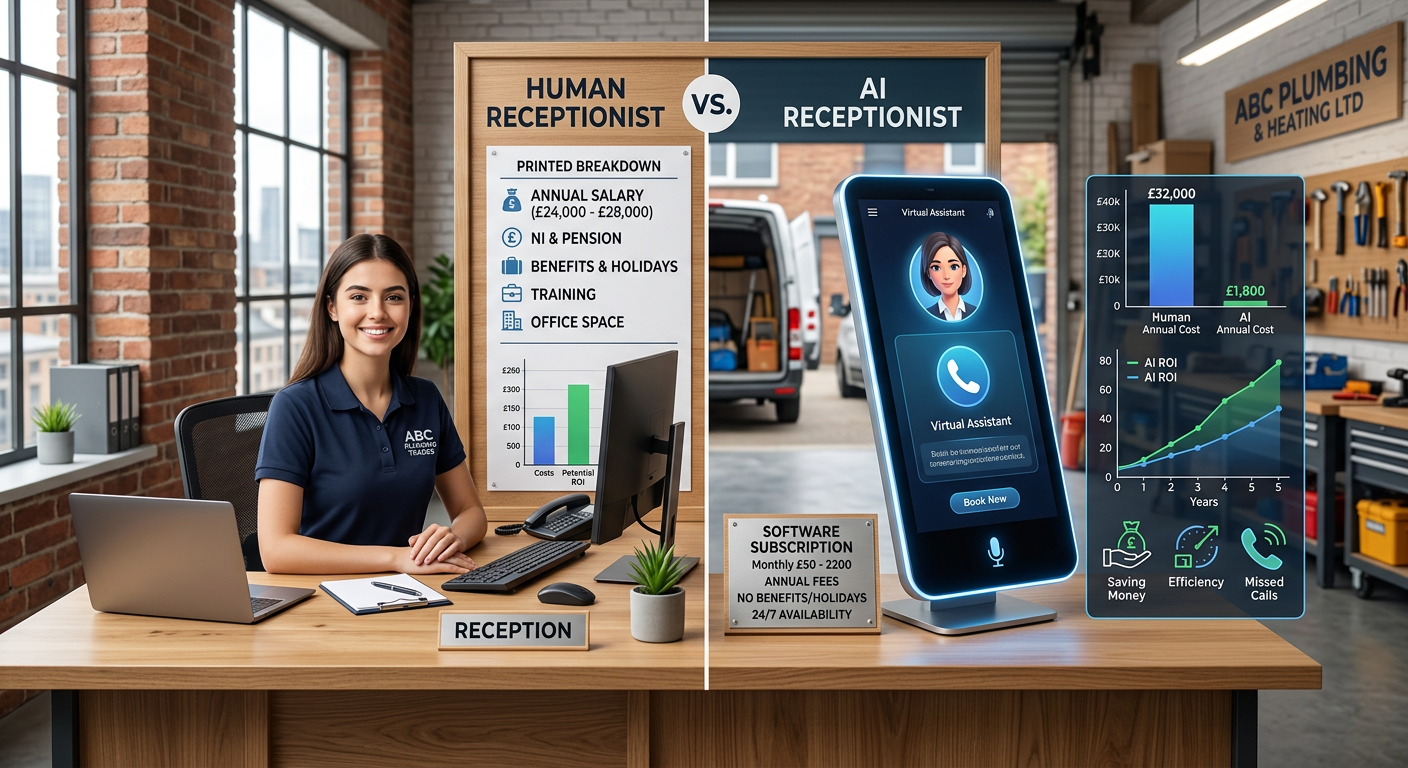
Cost Comparison: AI vs. Human Receptionist for UK Trades
Let's consider a hypothetical example of a small plumbing business in London:
Human Receptionist (Full-Time):
* Salary: £25,000 - £35,000 per year
* Benefits (National Insurance, Pension, Holiday Pay): £5,000 - £7,000 per year
* Equipment (Desk, Phone, Computer): £1,000 (one-off)
* Training: £500 (one-off)
* Total Annual Cost: £30,500 - £42,500
AI Receptionist:
* Subscription Fee: £50 - £200 per month
* Setup Fee: £0 - £500 (one-off)
* Total Annual Cost: £600 - £2,900
Did you know?
UK trades businesses report an average of 20% increase in booked jobs within the first quarter after implementing an AI phone answering service.
As you can see, the cost difference is significant. However, it's important to consider the value that a human receptionist can bring in terms of building relationships and handling complex inquiries.
Integrating AI with Your Business Workflow
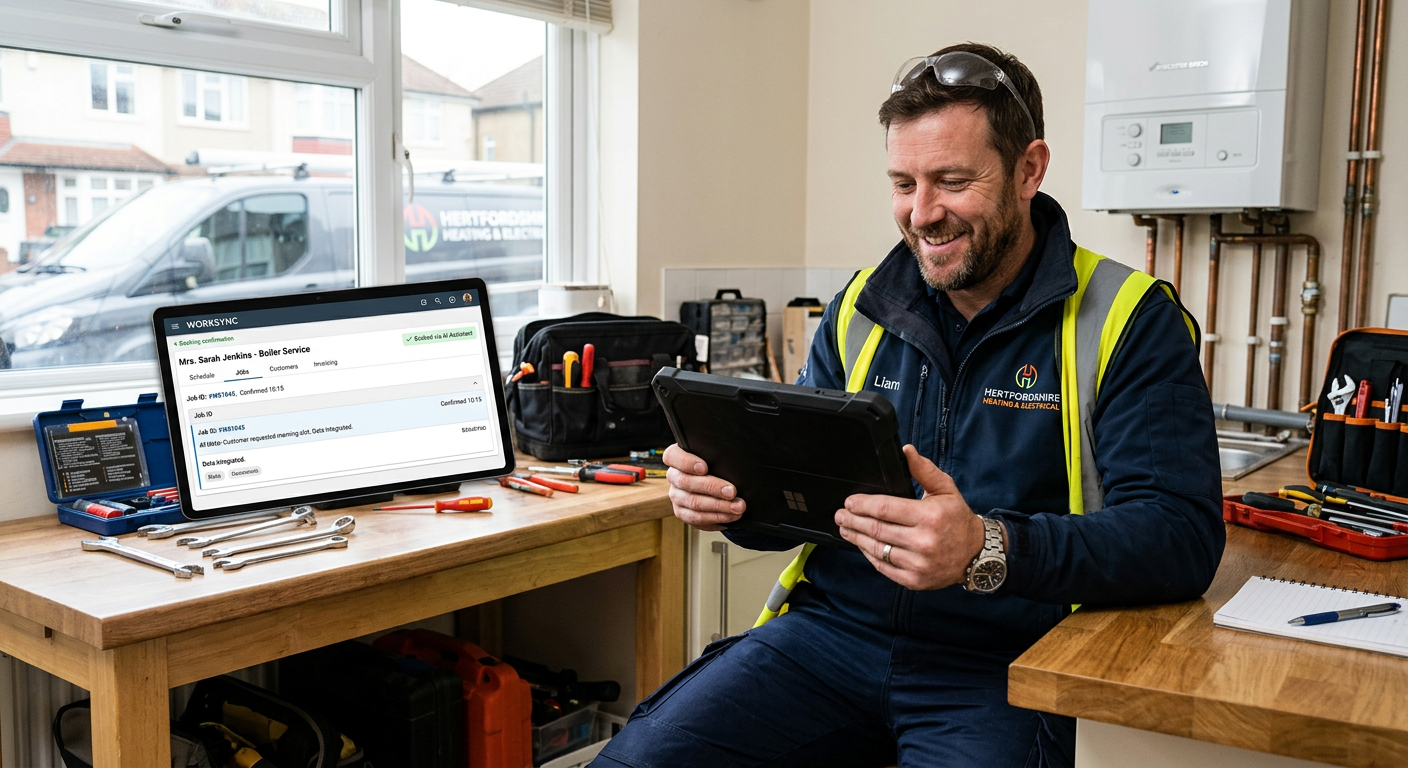
Many AI receptionist services integrate seamlessly with existing business tools. For example, you can connect your AI receptionist to your scheduling app to automatically book appointments and send reminders. You can also integrate it with your invoicing software to generate invoices and process payments. This integration can streamline your workflow and save you even more time.
Key Features to Look For in an AI Receptionist:
- Customisable Greetings: The ability to create custom greetings that reflect your brand and professionalism.
- Call Routing: Intelligent call routing that directs calls to the appropriate team member based on the caller's needs.
- Appointment Scheduling: Automated appointment scheduling that integrates with your calendar.
- Message Taking: Accurate and reliable message taking capabilities.
- FAQ Answering: The ability to answer frequently asked questions automatically.
- Payment Processing: Secure payment processing capabilities.
- Integration with Job Management Software: Seamless integration with your existing job management software.
The Future of Receptionists in the Trades Industry
The future likely involves a hybrid approach. AI will handle routine tasks and after-hours calls, while human receptionists focus on building relationships and resolving complex issues. This combination allows you to leverage the strengths of both AI and human interaction, providing the best possible customer experience.
In conclusion, the choice between an AI receptionist and a human receptionist depends on your specific business needs, budget, and customer service priorities. Carefully weigh the pros and cons of each option before making a decision. Consider trialling an AI receptionist service to see how it performs in your business. By carefully evaluating your options, you can choose the solution that will help you improve efficiency, save money, and provide excellent customer service.
To streamline your business further, consider TradeFlow, the all-in-one job management software for UK tradespeople. Manage your leads, quotes, schedules, invoices, and more, all in one place.