How to Send Professional Quotes as an Electrician
Sending professional electrician quotes is essential for winning jobs and building trust with your clients. In a competitive market, a well-crafted quote can be the deciding factor. This guide will walk you through the steps to create quotes that impress potential customers and secure more work.
Why Professional Electrician Quotes Matter
First impressions count. A sloppy, unprofessional quote can immediately deter a client, making them question your expertise and attention to detail. A professional quote, on the other hand, conveys competence, transparency, and reliability. It demonstrates that you take your work seriously and value your client's business.
Beyond the initial impression, a detailed and accurate quote helps manage client expectations, prevent misunderstandings, and ultimately, ensures a smoother project execution. It also protects you from scope creep and disputes down the line. Utilising reliable quote software can significantly streamline this process, ensuring accuracy and professionalism.
Tip:
Always proofread your quotes carefully before sending them. Typos and errors can undermine your credibility.
Key Elements of a Winning Electrician Quote
To create a quote that stands out, make sure to include these essential components:
- Your Company Branding: Use your logo, company colours, and consistent fonts to reinforce your brand identity. Include your company name, address, phone number, and email address prominently.
- Client Information: Clearly state the client's name, address, and contact details.
- Quote Number and Date: Assign a unique quote number for easy tracking and reference. Include the date the quote was issued.
- Detailed Scope of Work: This is the most crucial part of your quote. Break down the project into individual tasks or line items. Be specific and avoid vague descriptions. For example, instead of "Wiring," specify "Install 10 double electrical sockets, including back boxes and faceplates, using 2.5mm twin and earth cable."
- Materials List: List all the materials required for each task, including quantities and unit prices. Be transparent about material costs. Consider using a tool that integrates with your material suppliers to get real-time pricing.
- Labour Costs: Clearly state your hourly rate or fixed price for labour. If you're charging a fixed price, explain how it was calculated (e.g., based on estimated hours).
- Total Cost: Clearly display the total cost of the project, including materials, labour, and any applicable taxes (VAT).
- Payment Terms: Specify your payment schedule (e.g., 50% deposit, 50% upon completion). Outline acceptable payment methods (e.g., bank transfer, cheque, card payment).
- Validity Period: State how long the quote is valid for. Material prices can fluctuate, so it's important to set a time limit (e.g., 30 days).
- Terms and Conditions: Include a brief summary of your terms and conditions, such as liability, warranty, and cancellation policy. You can also include a link to your full terms and conditions on your website.
- Professional Closing: Thank the client for considering your services and invite them to contact you with any questions. Include your signature (or a digital signature).
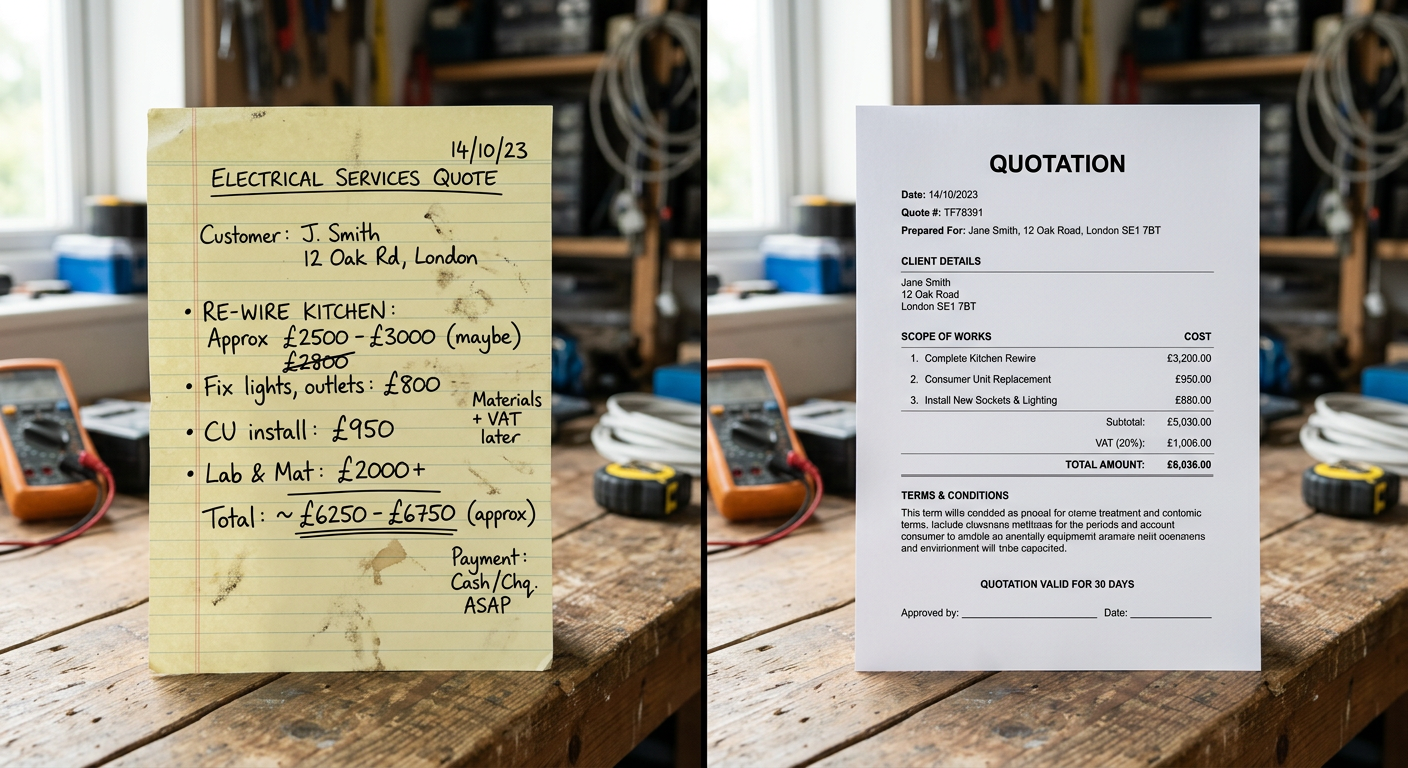
Step-by-Step Guide to Creating Professional Electrician Quotes
Here's a step-by-step process to follow when creating your quotes:
- Initial Consultation: Meet with the client to discuss their needs and expectations. Ask clarifying questions to fully understand the scope of work. Take detailed notes and measurements.
- Site Survey: Conduct a thorough site survey to assess the existing electrical infrastructure and identify any potential challenges. This will help you provide a more accurate quote.
- Material Pricing: Obtain accurate pricing for all required materials from your suppliers. Factor in any potential price fluctuations or lead times.
- Labour Estimation: Estimate the time required to complete each task. Be realistic and factor in any potential delays.
- Quote Creation: Use a professional invoicing app or quoting software to create your quote. Ensure all the key elements listed above are included.
- Review and Proofread: Carefully review the quote for accuracy and completeness. Proofread for any typos or errors.
- Delivery: Send the quote to the client promptly, preferably via email as a PDF attachment. Follow up with a phone call to answer any questions.
- Follow Up: If you don't hear back from the client within a week, follow up to check if they have any questions or require further information.
Formatting and Presentation Tips
* Use a clear and legible font: Choose a professional font like Arial, Calibri, or Times New Roman.
* Use bullet points or numbered lists: To break up large blocks of text and make the quote easier to read.
* Use bolding and highlighting: To emphasize important information, such as the total cost or payment terms.
* Use white space effectively: Don't overcrowd the quote. Use white space to create a clean and professional look.
* Use a professional template: Consider using a pre-designed quote template to save time and ensure consistency.
Did you know?
Studies show that quotes with detailed descriptions of work are 30% more likely to be accepted.
Common Mistakes to Avoid
* Vague Descriptions: Avoid using vague descriptions like "Electrical work." Be specific about the tasks involved.
* Inaccurate Pricing: Double-check your material costs and labour rates to ensure accuracy.
* Hidden Fees: Be transparent about all costs. Avoid adding hidden fees that could surprise the client.
* Ignoring Client Questions: Respond promptly and thoroughly to any questions the client may have.
* Lack of Professionalism: Avoid using slang or unprofessional language in your quote.

Using Technology to Streamline Your Quoting Process
Manually creating quotes can be time-consuming and prone to errors. Consider using job management software like TradeFlow to automate the process and improve accuracy. Features like pre-built templates, material databases, and automated calculations can save you significant time and effort. You can even manage your social media management through the platform to attract more clients in the first place! With features like AI phone answering, you'll never miss a potential client. Plus, having a professional website makes your business look more trustworthy and reliable.
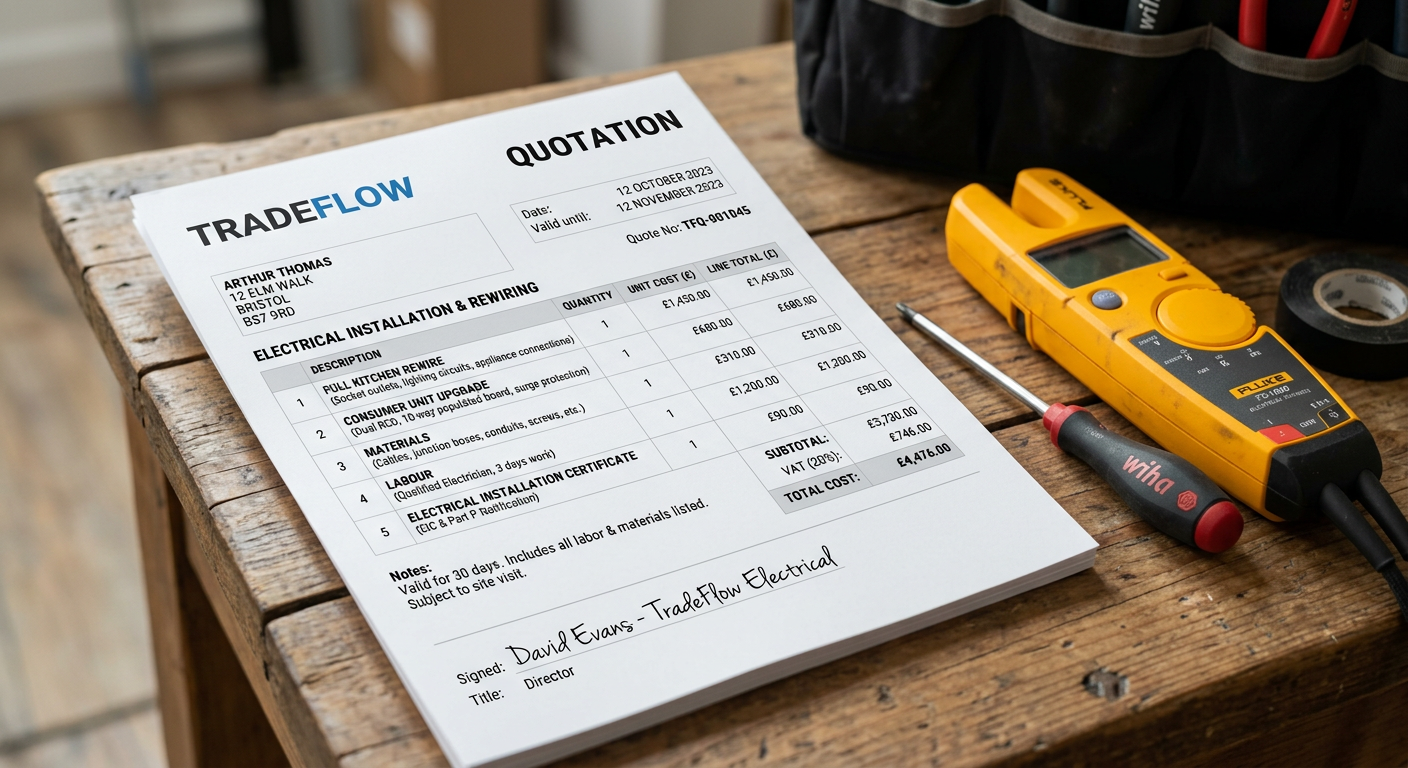
Creating and sending professional electrician quotes is a crucial aspect of running a successful electrical business. By following the tips and best practices outlined in this guide, you can create quotes that impress clients, win more jobs, and build a strong reputation in the industry. Remember, a well-crafted quote is an investment in your business's future. TradeFlow offers a comprehensive solution to manage your quotes and other essential business tasks efficiently, freeing you up to focus on what you do best: providing excellent electrical services.