Tradespeople: Improving Cash Flow Management in 2026
Running a successful trades business in the UK requires more than just skill and hard work; it demands effective cash flow management. Many tradespeople struggle to maintain a healthy cash flow, leading to stress, missed opportunities, and even business failure. This guide provides practical strategies to help you improve your cash flow and achieve financial stability.
Understanding Your Cash Flow Cycle
Before implementing any strategies, it's essential to understand the cash flow cycle in your business. This cycle represents the time it takes to convert your investments in resources (materials, labour) into cash.
- Initial Investment: Purchasing materials, paying wages, covering overheads.
- Work in Progress: Performing the job for the client.
- Invoicing: Sending the invoice to the client after job completion.
- Payment: Receiving payment from the client.
Tip:
Minimise the time it takes to complete each stage of the cycle. For example, negotiate better payment terms with suppliers, complete jobs efficiently, and send invoices promptly.
Strategies for Improving Cash Flow Management
Here are several proven strategies for improving cash flow in your trades business:
1. Accurate and Timely Invoicing
Invoicing promptly and accurately is critical. Use an invoicing app to create professional invoices on-site and send them immediately after job completion.
* Issue invoices immediately: Don't wait until the end of the week or month.
* Clearly detail all work: Include descriptions of services, materials, and labour costs.
* Specify payment terms: Clearly state when payment is due (e.g., net 7, net 14, net 30).
* Offer multiple payment options: Accept credit cards, bank transfers, and even offer payment plans where appropriate.

2. Effective Credit Control
Managing your debtors is crucial for maintaining healthy cash flow. Implement a robust credit control system.
* Check creditworthiness: Before starting a large project for a new client, check their credit history.
* Require deposits: Ask for a percentage of the total cost upfront to cover initial expenses.
* Send payment reminders: Automate payment reminders to clients who haven't paid on time.
* Follow up on overdue invoices: Don't be afraid to chase late payments. A polite but firm approach is often effective.
3. Negotiate Payment Terms with Suppliers
Extending your payment terms with suppliers can free up cash. Negotiate longer payment periods (e.g., net 60 or net 90) to improve your cash flow.
* Build strong relationships: Maintain good relationships with your suppliers.
* Consolidate purchases: Negotiate better terms by purchasing in bulk from a single supplier.
* Explore early payment discounts: Some suppliers offer discounts for early payment, which can be beneficial if you have available cash.
4. Control Expenses and Reduce Overheads
Carefully managing your expenses is essential for improving cash flow. Identify areas where you can reduce costs without compromising quality.
* Review your budget: Regularly review your budget and identify areas where you can cut back.
* Shop around for better deals: Compare prices for materials, insurance, and other services.
* Reduce waste: Minimise waste of materials and resources.
* Optimise travel routes: Reduce fuel consumption and travel time between jobs.
Did you know?
On average, UK tradespeople spend 20% of their time on administrative tasks. Automating these tasks can save time and money, freeing up cash for other areas of your business.
5. Use Job Management Software
Implementing a job management software like TradeFlow can significantly improve your cash flow management. These tools offer features such as:
* Automated invoicing: Create and send invoices quickly and easily.
* Payment tracking: Monitor payments and send reminders automatically.
* Expense tracking: Track expenses and manage your budget effectively.
* Improved scheduling: Optimise your schedule to minimise travel time and maximise productivity.
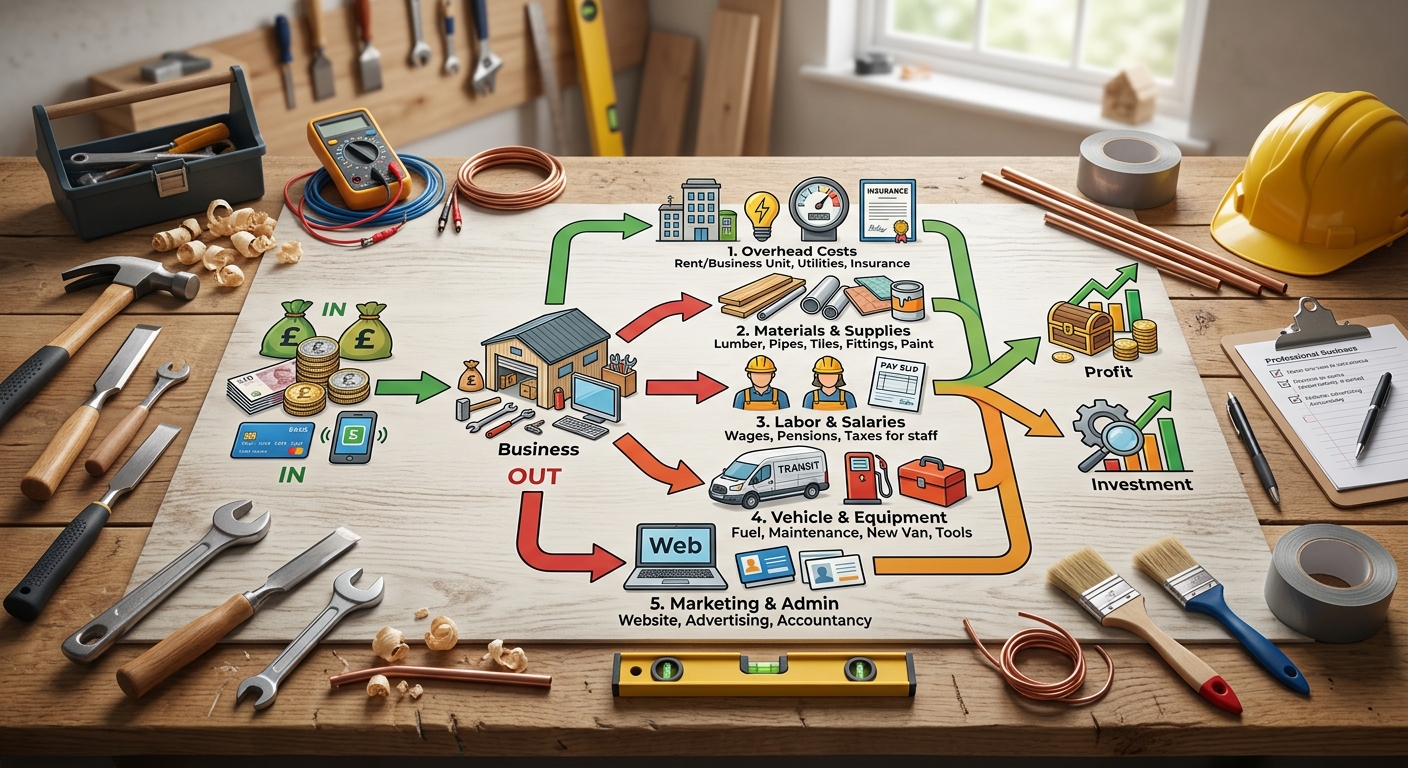
6. Budgeting and Forecasting
Create a detailed budget and cash flow forecast to anticipate future financial needs. This will allow you to plan for potential shortfalls and take proactive measures to address them.
* Track your income and expenses: Use accounting software to monitor your financial performance.
* Create a cash flow forecast: Project your income and expenses for the next few months to identify potential cash flow gaps.
* Regularly review and update your budget: Adjust your budget as needed based on your actual performance.
7. Consider Financing Options
If you experience temporary cash flow problems, consider exploring financing options such as:
* Overdraft: A short-term borrowing facility that allows you to overdraw your bank account.
* Invoice financing: Borrow money against your outstanding invoices.
* Business loan: A longer-term loan to finance growth or cover expenses.

Tip:
Before taking out any financing, carefully consider the costs and benefits and ensure you can afford to repay the loan.
8. Embrace AI for Admin Tasks
Consider using AI powered tools like AI phone answering to free up time for core business activities, allowing you to focus on income-generating tasks. This can indirectly improve cash flow by boosting productivity and customer satisfaction.
Effective cash flow management is essential for the long-term success of any trades business. By implementing these strategies, you can improve your financial stability, reduce stress, and focus on growing your business. Take the time to understand your cash flow cycle, control your expenses, and use technology to streamline your financial processes.
Want to streamline your job management and improve your cash flow? Explore how TradeFlow can help you manage your business more efficiently. Visit our website to learn more.