Tradespeople: Mastering Cash Flow Management
Cash flow management is the lifeblood of any successful business, and for UK tradespeople, it’s especially critical. Managing your money effectively can mean the difference between thriving and struggling, particularly with unpredictable material costs and seasonal fluctuations in demand. This guide will equip you with the knowledge and strategies to master cash flow management and build a financially secure future for your trade business.
Why Cash Flow Management is Crucial for Tradespeople
Many tradespeople focus primarily on the quality of their work and securing new jobs. While these are undoubtedly important, neglecting cash flow management can quickly lead to financial difficulties. Poor cash flow can result in late payments to suppliers, difficulty covering operating expenses, and ultimately, business failure.
Tip:
Think of your cash flow as the oxygen supply to your business. Deplete it, and your business will suffocate.
Effective cash flow management allows you to:
* Pay suppliers on time: Maintain good relationships with suppliers and secure favourable payment terms.
* Cover operating expenses: Ensure you have sufficient funds to cover wages, vehicle costs, insurance, and other essential expenses.
* Invest in growth: Free up capital to invest in new equipment, marketing, and training to expand your business.
* Weather unexpected storms: Build a financial buffer to cope with unexpected expenses or a sudden downturn in business.
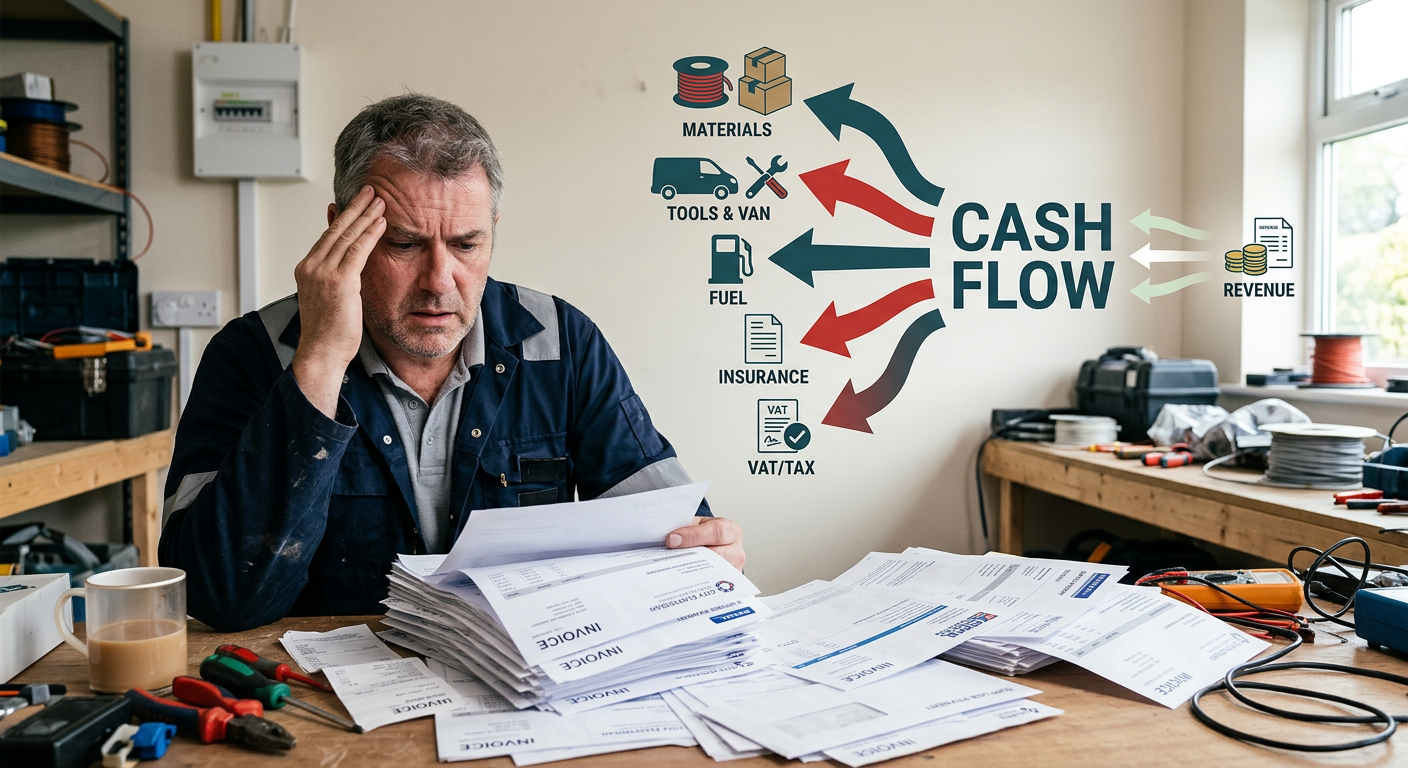
Strategies for Effective Cash Flow Management
Here are some practical strategies to improve your cash flow management:
1. Accurate and Timely Invoicing
Invoicing promptly is crucial. Don't delay sending invoices after completing a job. The sooner you invoice, the sooner you get paid. Use an invoicing app to automate the process and ensure accuracy. Include all relevant details, such as a clear description of the work completed, the agreed-upon price, and your payment terms.
* Automate invoicing: Use job management software to generate invoices automatically upon job completion.
* Offer multiple payment options: Provide customers with various payment options, such as bank transfer, credit/debit card, or online payment platforms.
* Set clear payment terms: Clearly state your payment terms on your invoices, including the due date and any late payment penalties.
2. Proactive Credit Control
Don't be afraid to chase up late payments. Implement a system for tracking outstanding invoices and following up with customers who are overdue. Send reminder emails or make phone calls to prompt payment. Consider offering early payment discounts to incentivize prompt payment.
3. Manage Expenses Carefully
Keep a close eye on your expenses and identify areas where you can cut costs. Negotiate better deals with suppliers, reduce unnecessary spending, and track your expenses meticulously. A job management software can help you track expenses effectively. Consider these strategies:
* Negotiate with suppliers: Contact your suppliers and attempt to negotiate better prices for materials.
* Consolidate purchases: Try to buy materials from fewer suppliers to leverage bulk discounts.
* Track mileage: Keep accurate records of your mileage to claim tax deductions.
* Reduce fuel consumption: Drive efficiently and maintain your vehicles to reduce fuel costs.
4. Budgeting and Forecasting
Create a budget to track your income and expenses and forecast your cash flow for the coming months. This will help you identify potential cash flow shortfalls and take corrective action before they become a problem. Regularly review your budget and forecast to ensure they are accurate and up-to-date.
Did you know?
Businesses that actively budget and forecast their cash flow are 60% more likely to experience sustainable growth.
5. Build a Cash Reserve
Aim to build a cash reserve to cover unexpected expenses or a temporary dip in income. This will provide you with a financial safety net and prevent you from having to borrow money or delay payments to suppliers. A good rule of thumb is to have at least three to six months' worth of operating expenses in reserve.
6. Consider Finance Options
Explore financing options such as invoice financing or a business line of credit to improve your cash flow. Invoice financing allows you to get paid for your invoices immediately, while a business line of credit provides you with access to funds when you need them. However, be sure to carefully consider the costs and risks associated with these options before taking them on.
7. Leverage Technology
Utilise technology to streamline your financial processes. Job management software can automate tasks such as invoicing, expense tracking, and reporting, freeing up your time to focus on other aspects of your business. Consider using a professional website that allows clients to book and pay online.
8. Managing Seasonal Fluctuations
Many trades experience seasonal highs and lows. Plan for these fluctuations by building a cash reserve during peak seasons to cover expenses during slower periods. Consider offering discounts or promotions during off-peak seasons to attract more business.
Taking Control of Your Finances
Mastering cash flow management is an ongoing process. By implementing these strategies and regularly monitoring your financial performance, you can take control of your finances and build a financially secure future for your trade business. Don’t underestimate the power of proactive planning and consistent execution. Prioritise these financial practices alongside your skilled tradesmanship to ensure long-term success and stability.
TradeFlow is designed to help tradespeople like you streamline their operations and improve their cash flow. With features like automated invoicing, expense tracking, and detailed reporting, TradeFlow makes it easy to stay on top of your finances and make informed business decisions. Start your free trial today and experience the difference!